
Criminal Cases in the Thayer County Courts
Thayer County Court and District Court are both in Judicial District 1 and share the courthouse at 225 N. 4th Street in Hebron. County Court, Room 203, keeps misdemeanors, infractions, traffic and municipal-ordinance cases. It also conducts preliminary felony proceedings. District Court, Room 302, is the felony trial court after bind-over or direct filing.
The clerks maintain pleadings, court activity, orders, judgments, financial entries, and available images. The County Attorney decides what charges to file but does not serve as custodian of the finished case file. Traveling judicial assignments also mean the current portal or calendar is more reliable than assuming one permanent judge.
Two Thayer Criminal Case Counters
The division between Rooms 203 and 302 is more than a floor change. A felony may first appear in County Court for preliminary procedure and later continue in District Court. Searching only one court type can therefore leave part of the Thayer County criminal case path unseen. Misdemeanor and ordinance files remain with County Court.
Thayer County Court
Room 203, 225 N. 4th St.
Hebron, NE 68370
402-768-6325 ext. 4
7:30 a.m.-4:30 p.m.; closed noon-1 p.m.
Thayer District Court
Room 302, 225 N. 4th St.
Hebron, NE 68370
402-768-6116
7:30 a.m.-4:30 p.m. weekdays
The official County Court page is pictured below.
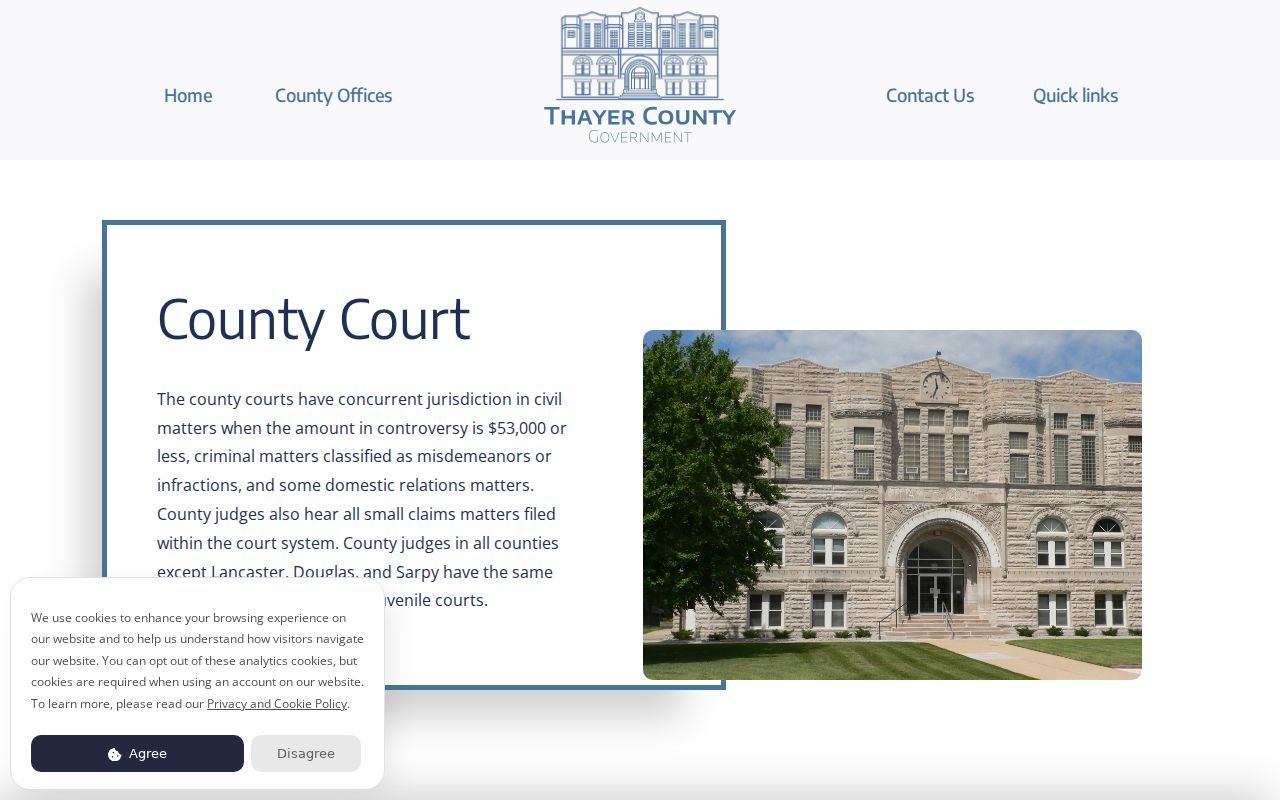
Its jurisdiction and stable counter details help a reader choose the correct clerk before requesting a file.
How to Search Case Records
The free courthouse terminal is the best no-fee channel for Thayer County criminal court cases. Nebraska JUSTICE offers remote access. Its one-time name search costs $17 even with no result, returns at most 30 public cases, remains available for three calendar days, and may lag new cases by 24 hours. Begin broadly. A middle initial absent from the court record can suppress the right match.
- Open JUSTICE or use the courthouse public terminal.
- Enter the party name as the court likely recorded it.
- Add Thayer, case year, court type, or case type only as needed.
- Open the offense, financials, and register of actions to find the outcome.
- Ask the correct clerk for non-imaged, older, or certified documents.
| Field Label | Type | Required | Notes |
|---|---|---|---|
| Party Name | Text | Yes for name mode | Last, First, Middle, Suffix; last name alone allowed |
| County | Multi-select | No | Select Thayer; multiple counties allowed |
| Case Year | Select | No | Narrows by filing year |
| Court Type | Select | No | County or District |
| Case Type | Multi-select | No | Choose criminal or another applicable category |
| Judge or Attorney | Multi-select | No | Use only when needed to narrow |
A search result is a lead. Open the details, verify the court and case number, and obtain a clerk copy when the exact filing matters.
If a broad name search returns more than 30 cases, add one reliable filter at a time. Start with Thayer County or court type, then test the year. Do not add uncertain criteria all at once because the portal applies what was entered and can hide the correct file.
Read Thayer Criminal Case Registers
The result list is just a door. The register of actions is the dated record of filings, hearings, court activity, and orders. Open the offense information to see what the court recorded, then trace the register to the disposition. Financials can show costs, judgments, payments, and restitution entries. Associated attorneys appear with parties.
Many filings uploaded after April 16, 2008 have clickable images. Older documents, protected material, or records never imaged require the clerk. Subscriber service costs $100 per year for up to ten users. General result lists are included after subscription, while Details, case-number searches, and judgment-date searches cost $2. Confirm any copy and certification charge with the clerk under the current court fee schedule.
Details may also contain judge notes where applicable, but those notes do not replace an entered order. Use the filed document and register date to establish what the court actually did. When financial entries show a balance, distinguish court costs, judgments, payments, and restitution instead of combining them into one figure.
Note: A filing date or open status does not establish guilt; read the final disposition and judgment before drawing a conclusion.
What the Case File Shows
A Thayer County criminal case file documents the prosecution as it moves, not merely the arrest. The charging instrument identifies the filed offense. The register tracks each step. Orders resolve motions and set terms. The judgment records the disposition and sentence. These are the fields most useful for understanding the case:
| Case Number & Court | Identifies the file and whether County or District Court holds it. |
|---|---|
| Charging Document | Shows the offense filed by the prosecutor, which may differ from intake allegations. |
| Register of Actions | Lists filings, hearings, orders, and court activity in date order. |
| Parties & Attorneys | Names the State, defendant, and associated counsel. |
| Disposition & Judgment | Records dismissal, acquittal, plea, conviction, or another outcome. |
| Sentence & Financials | May show custody, probation, costs, restitution, and payment entries. |
The case number and court identify the controlling file. Read the judgment alongside the register of actions to place each event in context.
Thayer Filed Charges Can Change
A booking label reflects jail intake. The County Attorney's charging instrument reflects the offense actually filed. Later amendment, dismissal, plea, trial, or acquittal can change the legal posture again. That is why Thayer County criminal court cases should be read from the filed charge through the final judgment.
- Arraignment
- The hearing where the filed charge is presented and a plea is entered.
- Disposition
- The court-recorded outcome of a charge.
- Bind-over
- The transfer of a felony matter beyond County Court's preliminary stage to District Court.
- Restitution
- A court-ordered payment for qualifying loss, shown in judgment or financial entries.
For deeper county-wide arrest and repository context, the Thayer County criminal history overview explains how those other records differ from the court file.
A reported disposition should eventually return to NSP, yet transmission can lag or fail. If a personal RAP lacks the court outcome, obtain the controlling judgment from the clerk and ask NSP about its correction process. The courthouse document is the best starting proof of what happened in that prosecution.
Stages of a Criminal Case
The court case starts with a filed charge, not with every police contact. County Court receives misdemeanors and early felony procedure. A felony may then move to District Court. Pretrial filings and hearings address evidence, scheduling, release terms, and other contested issues. A plea or trial leads to disposition, followed by sentencing when there is a conviction.
Case flow: Charges Filed › Arraignment › Pretrial › Plea or Trial › Disposition › Sentencing
There is no researched fixed timeline for each Thayer County stage. Use the register of actions and current calendar for the individual case rather than assuming a standard duration.
Room 302 Thayer Felony Records
The District Court clerk preserves felony papers, writs, orders, and records used for certification or authentication. The counter is open continuously through the county's normal weekday hours. Calling 402-768-6116 before travel can confirm whether a specific document is imaged, available for inspection, or subject to a current copy charge.
The official District Court page shown below identifies the court-record counter for Thayer County felony cases.
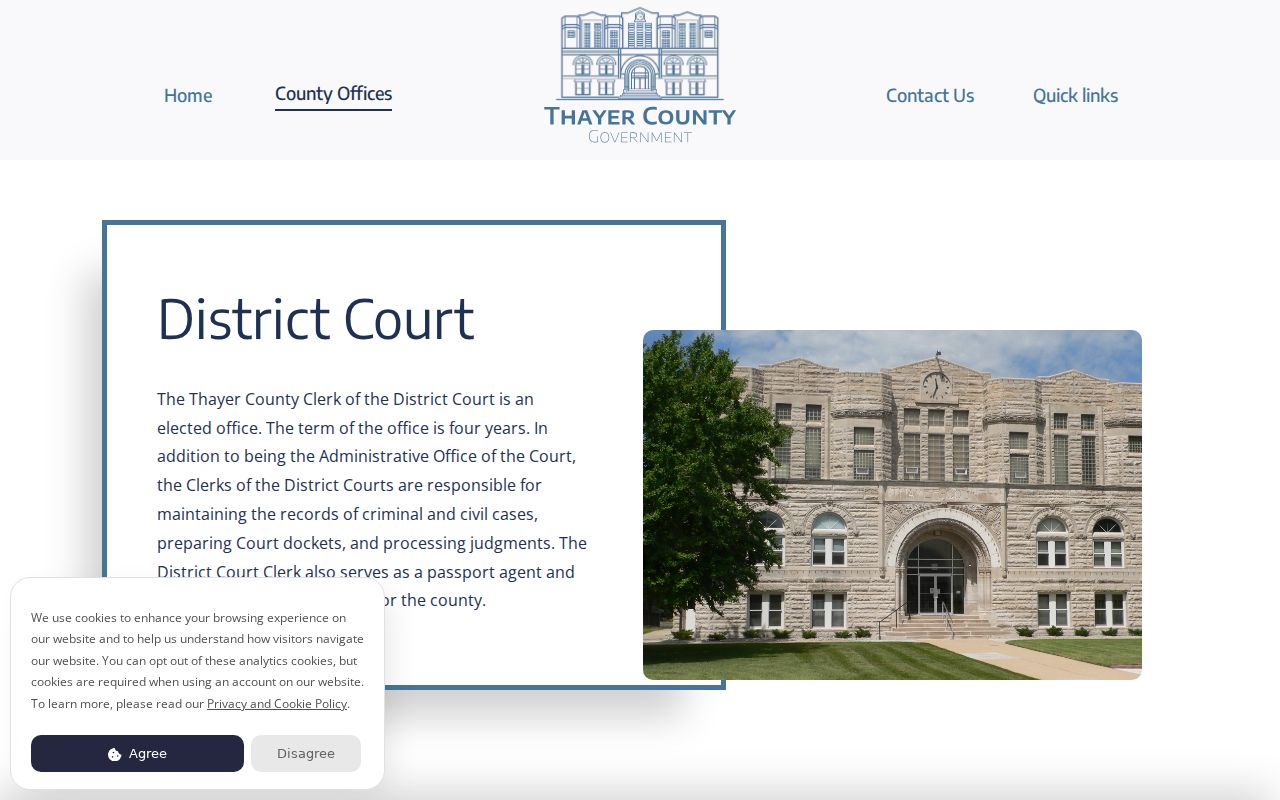
This direct clerk channel matters when JUSTICE shows an entry but no clickable filing image.
Access & Restrictions
Nebraska court records are generally open under judicial access rules, but sealed cases, juvenile material, victim information, and other protected data do not appear in ordinary public view. Nebraska law also states that a juvenile adjudication is not a conviction. An online omission may reflect a restriction, lag, spelling mismatch, or incomplete imaging rather than the absence of a file.
Ask the clerk to check the case number and explain what public access is available. A custodian may redact protected details while releasing the remainder. Adult sealing and set-aside remedies have different effects. Sealing restricts public access to an eligible matter, while a set-aside changes specified legal effects without automatically erasing the historical case.
Qualifying post-2016 dismissals and acquittals are generally sealed automatically under current guidance, while some older dismissals need a motion. A sealed record can still be available to the subject, an authorized person, and criminal-justice agencies. The clerk can identify the current Judicial Branch form without predicting eligibility.
Federal Cases Beyond Thayer Courts
A federal prosecution from Thayer County does not appear as a state trial case. The U.S. District Court for the District of Nebraska is the proper court, and PACER supplies federal dockets and documents after registration. Access is $0.10 per page as of research, with quarterly charges of $30 or less waived. Opinions and courthouse-terminal access are free. A published change takes effect in 2027.
The Lincoln counter is at the Robert V. Denney Federal Building, 100 Centennial Mall North, Room 593, and can be reached at 402-437-1900 or 866-220-4379. The court directs mail to Omaha, so verify mailing instructions before sending a request. Federal custody is searched through the Bureau of Prisons rather than the Thayer jail or NDCS.
The official PACER page is shown below.
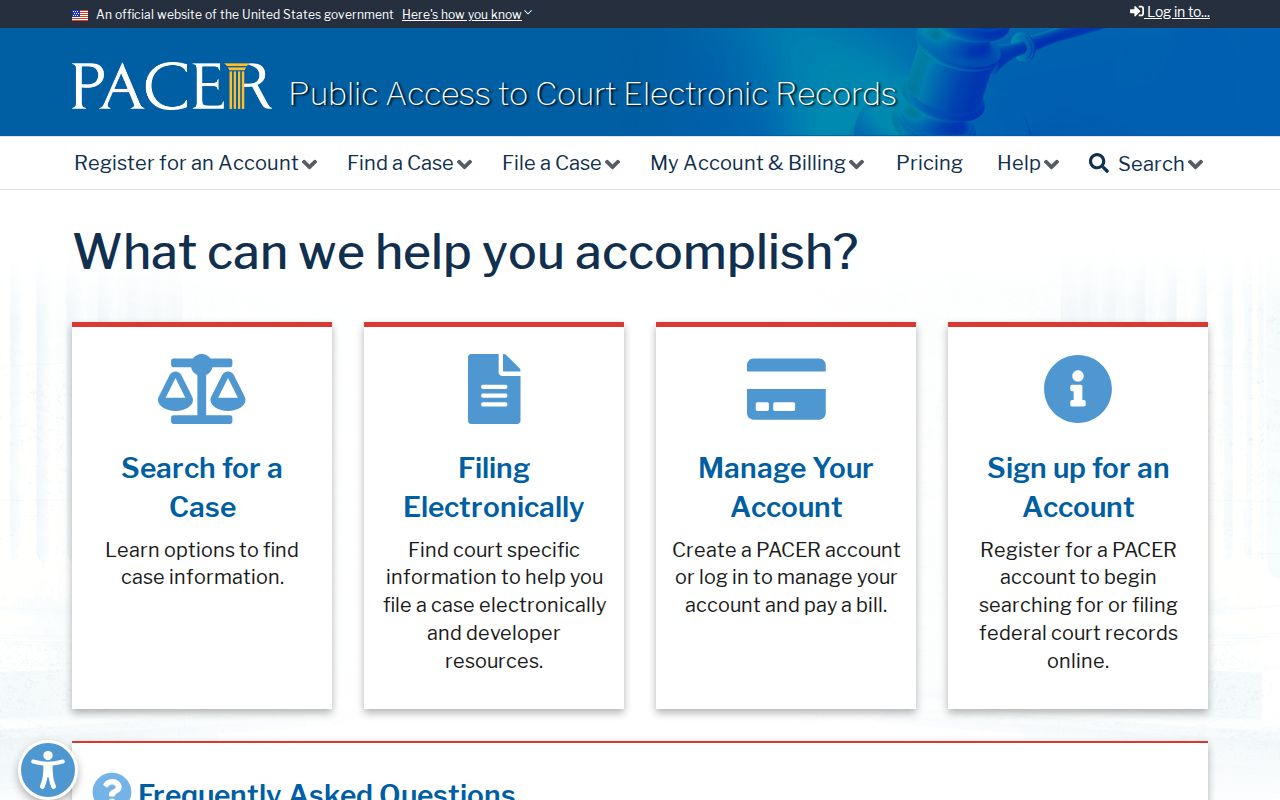
PACER is the federal comparison layer, not an alternate source for County Court or District Court files.